VeryNile: Pioneering a Circular, Community-Led Model to Clean the Nile
Feature |
Alfanar |
2026-02-03
VeryNile is tackling one of Egypt’s most pressing environmental challenges: plastic pollution in the Nile – a major contributor of marine pollution into the Mediterranean and a significant strain on ecosystems, public health and local economies.
Addressing this challenge requires more than clean-up efforts alone. Through a locally rooted, circular model, VeryNile combines environmental restoration with income generation, community services, and public awareness – demonstrating how environmental action can deliver sustained social and economic value.
The VeryNile Story: A Community-Driven Approach to Plastic Waste
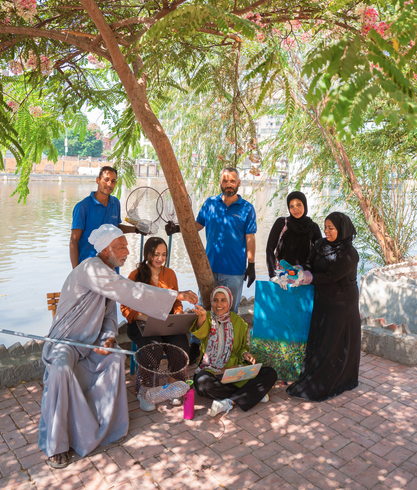
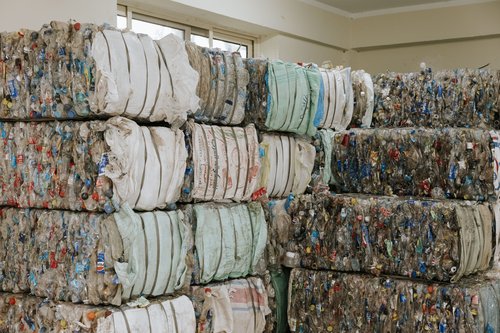
Since its founding by Alban de Menoville in 2019, VeryNile has worked directly with fishing communities along the Nile to remove plastic waste from the river. Today, over 200 fishermen in Cairo, Assiut, and Upper Egypt are engaged weekly, collecting plastic in exchange for stable, predictable income at a time when declining fish stocks have eroded traditional livelihoods. On a monthly basis, more than 30 tonnes of plastic waste are collected, sorted, and channelled into recycling streams rather than entering waterways or landfills.
“VeryNile did not just open houses in our community, they opened doors for us – financially, educationally, and in our daily lives.”
Sayed, Nile Fisherman
From Waste Collection to a Circular Economy Model
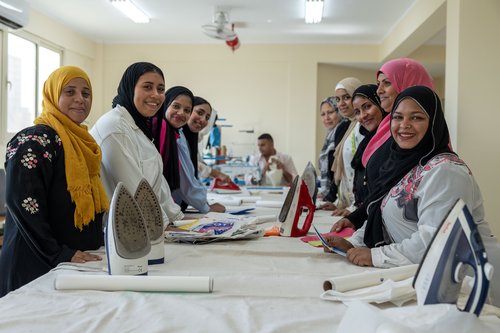
VeryNile’s work extends well beyond collection. Plastic waste is segregated, compacted, and recycled through partner facilities, while part of the material is transformed locally through VeryNile.shop. Here, more than 30 artisans – 80% of them women previously excluded from the labour market – are trained in vocational skills to create products from recovered plastics – from bags to furniture.
This approach creates value at every stage of the chain:
- Income generation for fishermen
- Employment and entrepreneurship opportunities for women
- Reduced plastic in the Nile and Mediterranean
- Marketable recycled products with traceable impact
To ensure transparency, VeryNile has developed a digital traceability system that tracks each kilogram of plastic from collection point to recycling facility, recording location, material type, processing steps, and income earned by each fisherman. This system underpins the enterprise’s credibility with institutional and private-sector partners.
Environmental Action That Delivers Social Outcomes
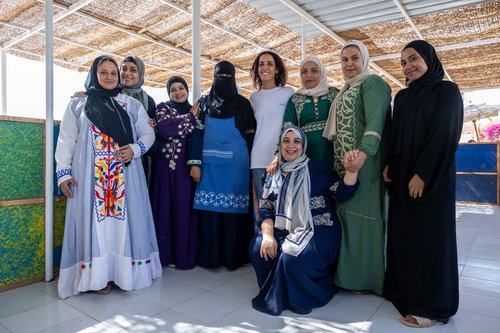
VeryNile also invests in the wider community through a series of locally led programmes. These include a community kitchen run by local women, expanded access to healthcare – including more than 200 in-person consultations – and education programmes for adults and children that reach over 1,500 participants each year.
“My dream was to head a kitchen, and now my dream came true.”
Om Nada, Head Chef, VeryNile Community Kitchen
Public awareness is a core pillar of VeryNile’s impact model. Through digital campaigns and media engagement, the enterprise reaches over one million people organically each year, helping shift public attitudes towards waste, responsibility, and environmental stewardship.
Alfanar’s SEED Support: Building the Foundations for Scale
VeryNile’s journey with Alfanar began in 2022, when it was selected as part of a cohort of promising early-stage social enterprises to join Alfanar’s six-month support programme (SEED).
The programme combined hands-on training with tailored mentorship, designed around the real-world operating context of each enterprise. During this period, VeryNile completed five core modules, spanning theory of change, impact modelling, and finance – delivered through group workshops, one-to-one sessions, and applied assignments.
By the end of the programme, VeryNile progressed to the next phase of our support: a focused three-month engagement to develop a robust business plan and financial model. This laid the foundation to scale VeryNile’s impact across Egypt over the following three years.
“In ancient Egyptian thought, the Nile was inseparable from the concept of Ankh, the principle of life. Today, VeryNile is not only contributing to the restoration of the Nile’s water quality, but also facilitating a community-centred approach that renews life, dignity, livelihoods, and collective pride.”
Shenouda Bissada, Egypt Director, Alfanar
A Scalable Financial Model
Since participating in Alfanar’s programme, VeryNile’s progress continues apace. In 2024, the enterprise achieved Verra Plastic Waste Reduction Certification, a globally recognised standard that independently verifies plastic removal and recycling. This certification enables VeryNile to issue plastic credits, creating an additional revenue stream that supports operations, community services, training, and future replication.
VeryNile is the first enterprise in Alfanar’s portfolio to adopt a plastic credits system. Revenues generated through plastic credits are reinvested into the community, supporting economic participation for fishermen, job creation and fair wages for artisans, access to health and education services, and organisational strengthening.
This innovative structure strengthens financial resilience while keeping impact delivery at the centre of the model.
“As the region’s leading environmental movement, VeryNile’s expansion is key to building cleaner, more sustainable communities across the Middle East.”
Alban de Menoville, Managing Director
From SEED to Sustained Impact
VeryNile’s journey reflects the ambition behind Alfanar’s model: supporting locally led enterprises to build robust business models that deliver measurable environmental and social returns over time. As an alumni enterprise, VeryNile continues to demonstrate how community-anchored solutions can grow, attract international recognition, and remain accountable to the people they serve.
Their work stands as a clear example of what becomes possible when environmental innovation is treated not as a standalone intervention, but as infrastructure – rooted in place, designed for scale, and sustained by local leadership.

